
What Does Sustainable Packaging Really Mean?
Sustainable packaging is not defined by one material, one claim, or one environmental attribute. The most useful approach is to evaluate the complete packaging system—including materials, design, manufacturing, transportation, product protection, and end-of-life considerations.
Quick Answer
Sustainable packaging is packaging designed to reduce environmental impact while still protecting the product and performing as required. Depending on the application, that may involve recycled content, lightweighting, recyclability, material selection, design efficiency, transportation, or end-of-life improvements.
Explore the Visual Guide
These six visual lessons highlight the key ideas behind evaluating packaging sustainability as a complete system.
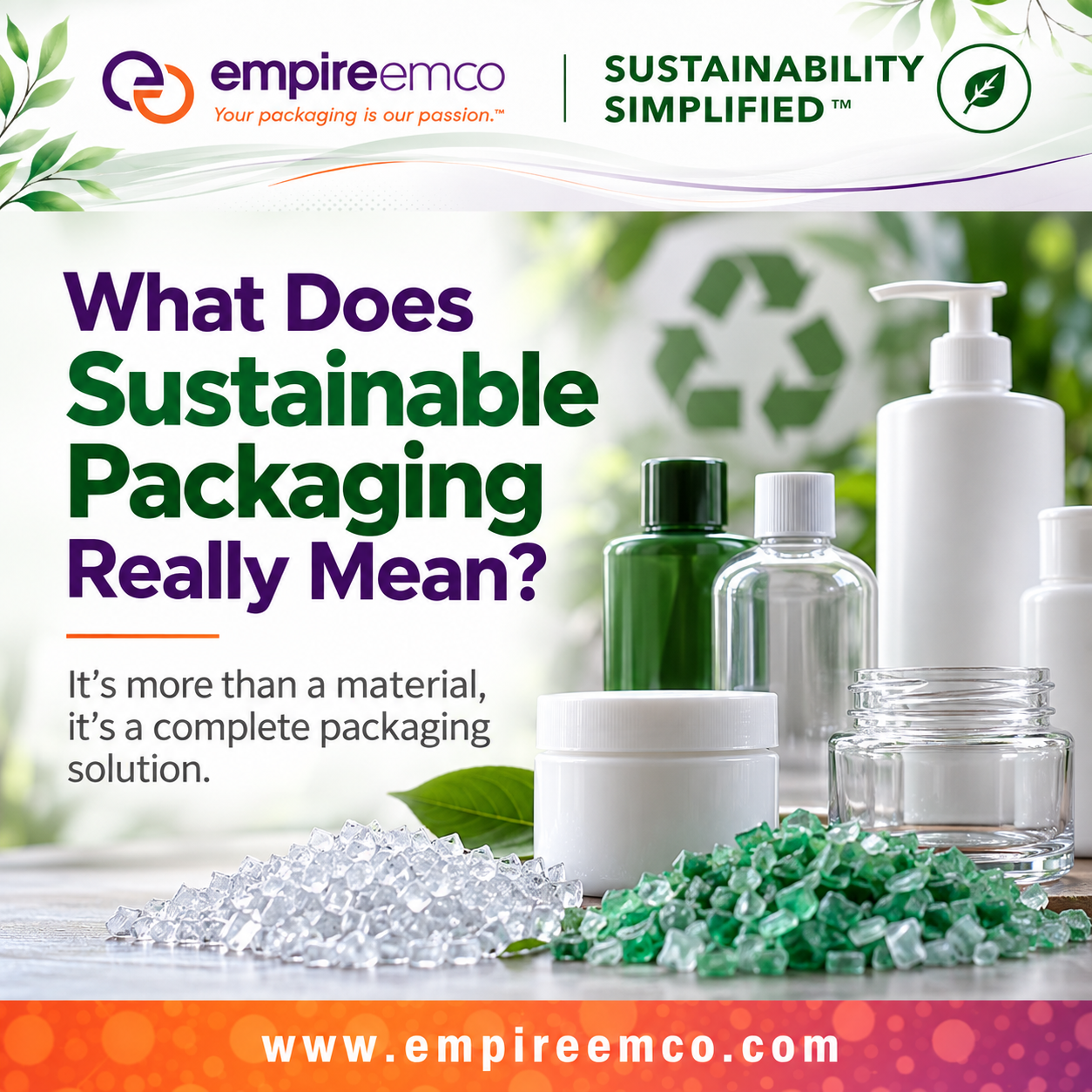
What Does Sustainable Packaging Really Mean?
Sustainable packaging should be evaluated in context. Material choice matters, but the package must also protect the product, perform reliably, support the supply chain, and align with the company's sustainability objectives.
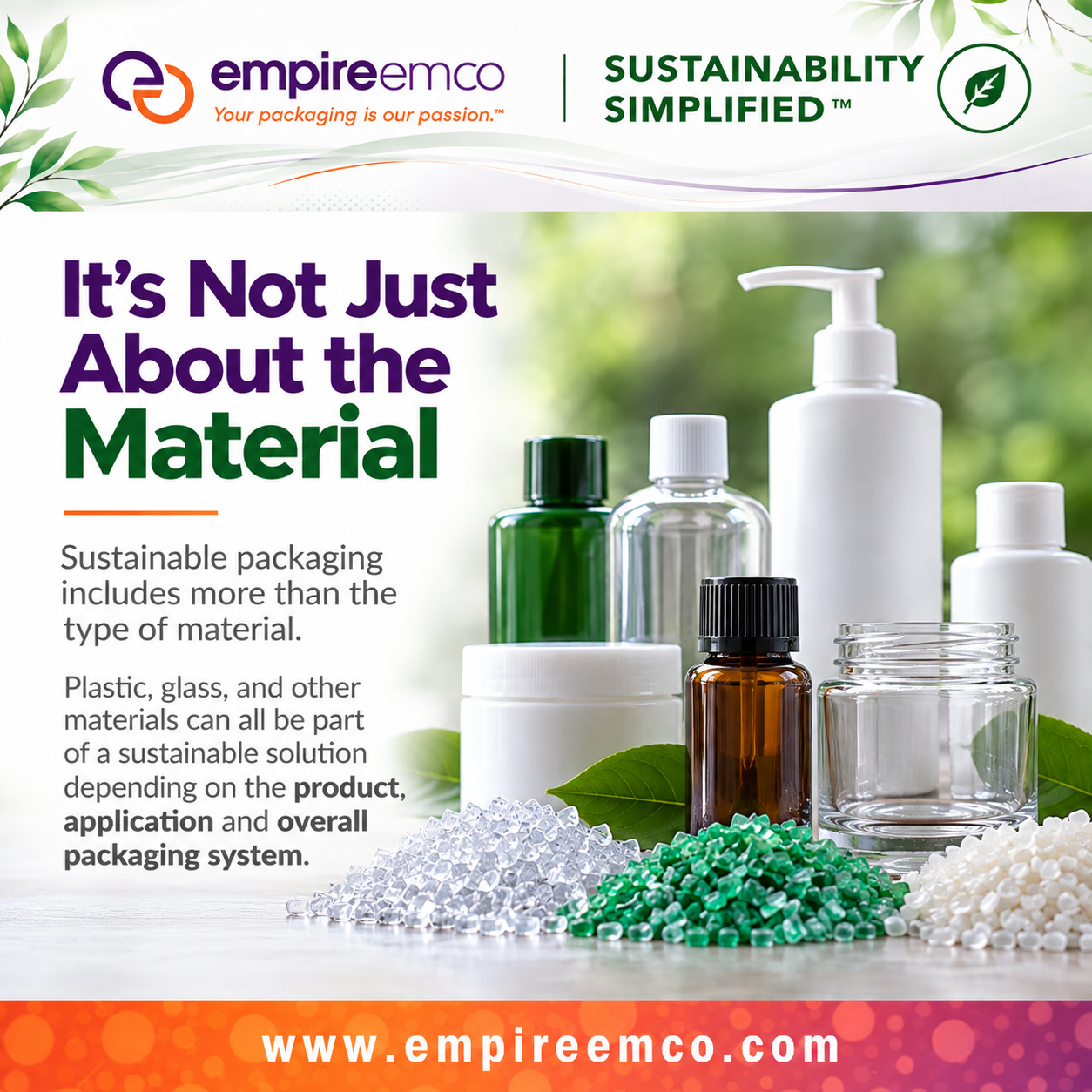
It's Not Just About the Material
Choosing between plastic, glass, metal, or another material does not automatically determine whether a package is sustainable. Weight, performance, manufacturing, transportation, recycled content, recyclability, and product protection can all influence the overall result.
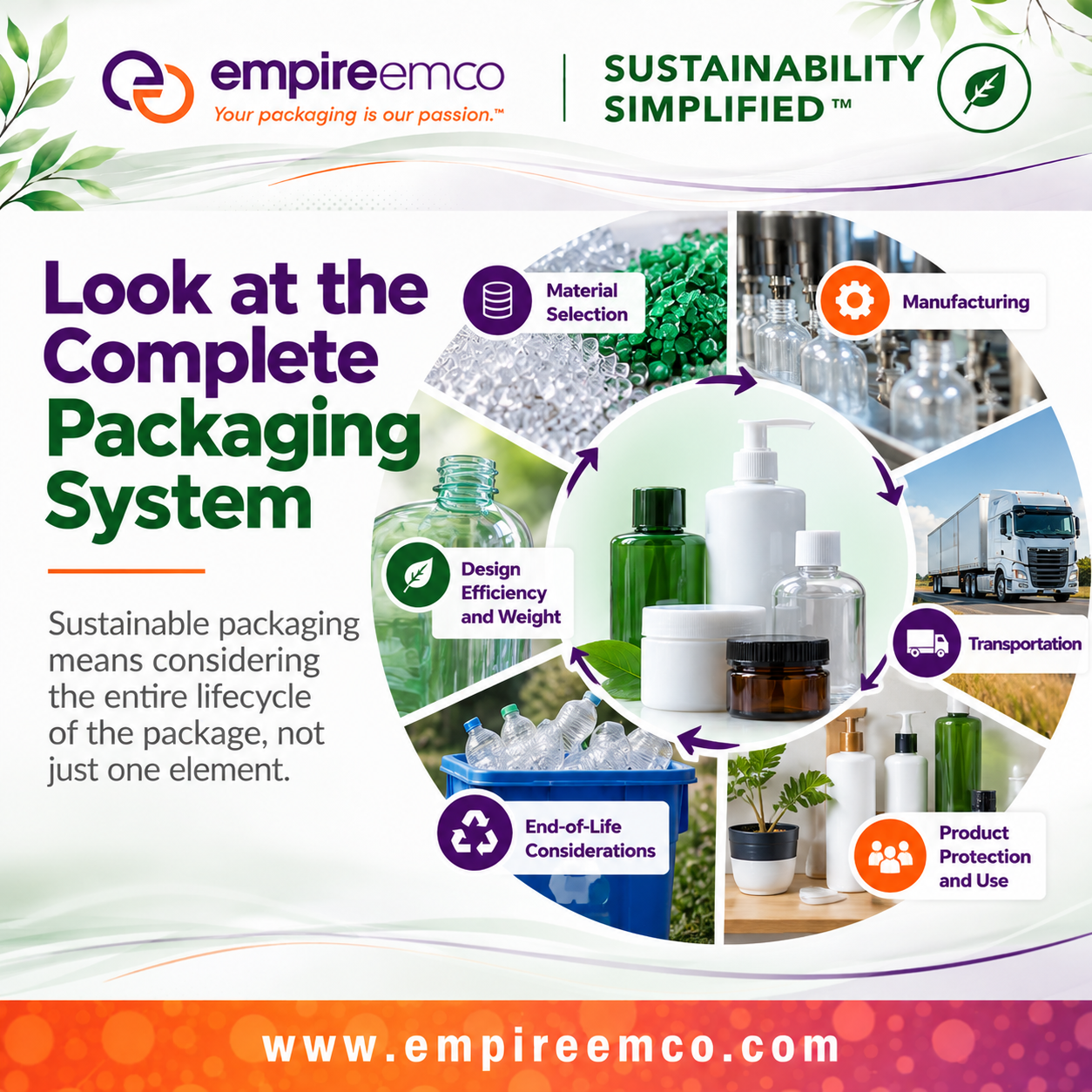
Look at the Complete Packaging System
Packaging sustainability extends beyond the container itself. Material selection, manufacturing, transportation, package design, product use, and end-of-life are interconnected parts of the packaging system and should be considered together.
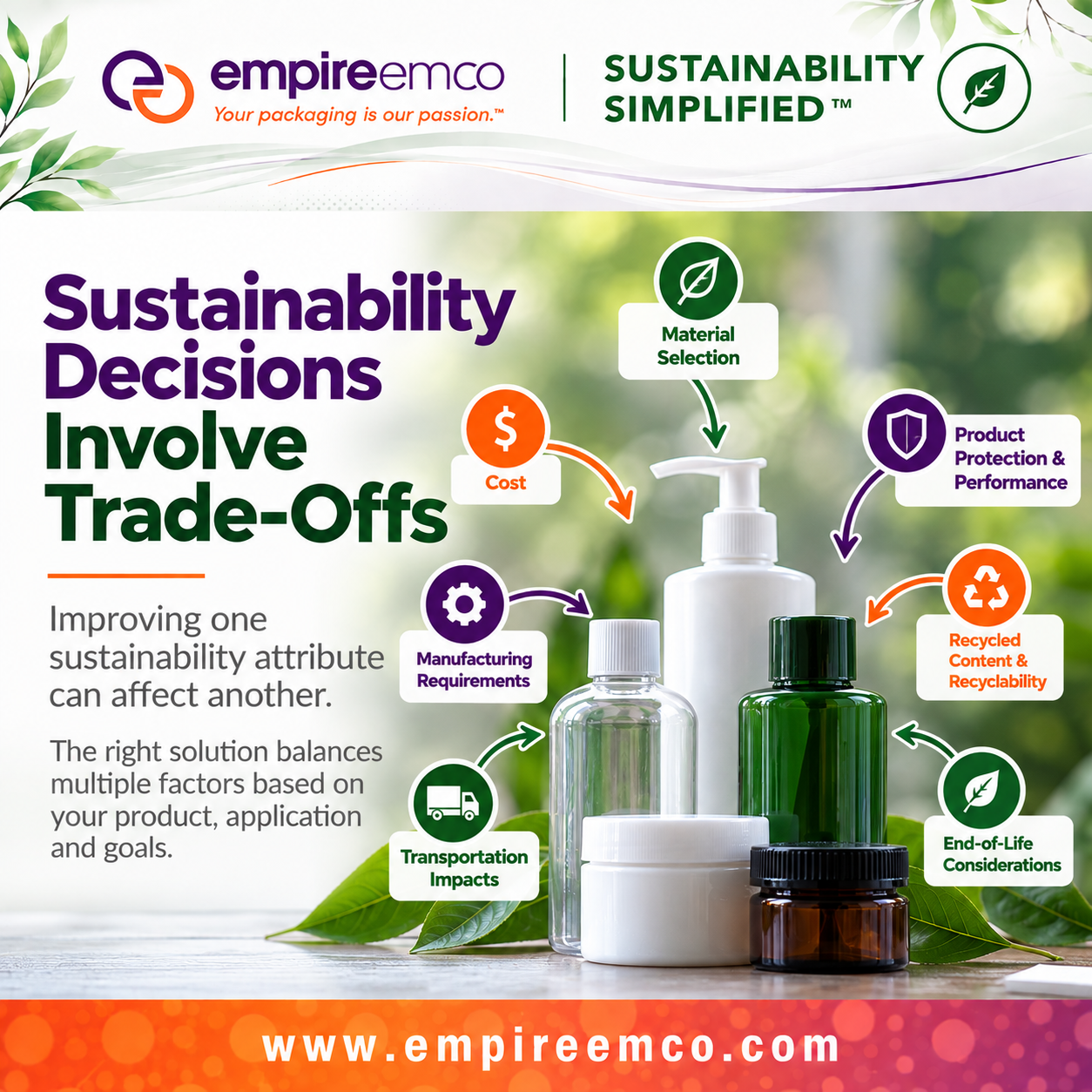
Sustainability Decisions Involve Trade-Offs
Improving one packaging attribute can affect another. Reducing material may lower package weight, for example, but the package still needs to maintain product protection and performance. Sustainability decisions are strongest when these trade-offs are evaluated together.
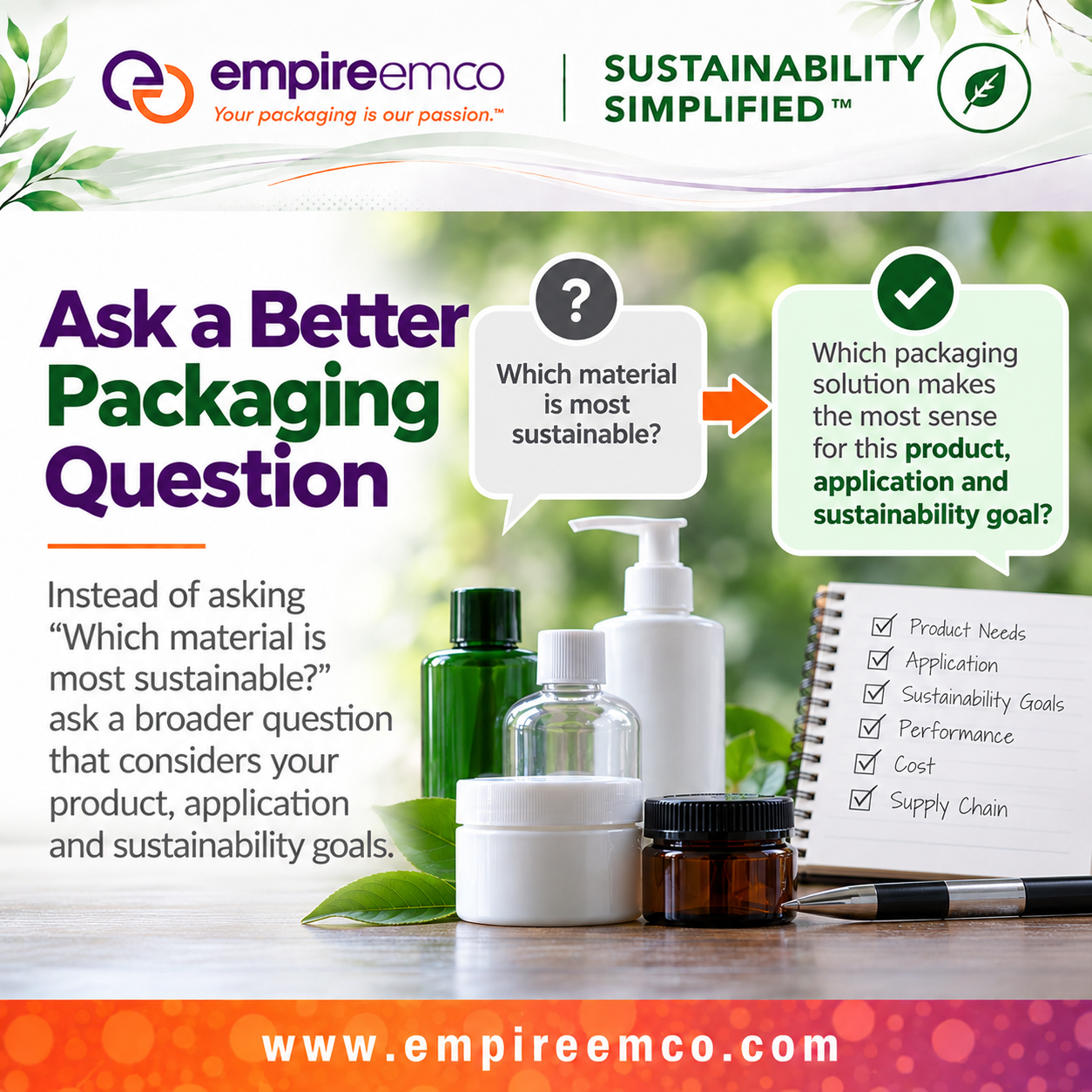
Ask a Better Packaging Question
Instead of asking which packaging material is automatically the most sustainable, consider which packaging solution best fits the product, application, performance requirements, supply chain, and sustainability goals.
Continue Exploring Sustainability Simplified™
The Sustainability Simplified™ Knowledge Center provides practical packaging education covering materials, recycling, circularity, carbon and emissions, life cycle thinking, and other sustainability topics that affect packaging decisions.
The Key Takeaway
There is rarely one packaging material or format that is automatically the most sustainable choice for every product.
A more useful approach is to evaluate the complete packaging system and understand how different decisions affect performance, resource use, transportation, recyclability, cost, and end-of-life.
- Consider the complete package, not just one material claim.
- Protecting the product remains a critical packaging function.
- Material reduction should not compromise required performance.
- Recycled content and recyclability should be evaluated in context.
- Transportation and supply-chain impacts can influence the overall result.
- Packaging sustainability decisions often involve trade-offs.
Continue Learning
Want a deeper explanation of the principles behind sustainable packaging? Explore the full Sustainability Simplified™ guide to what sustainability means in packaging.
Read: What Is Sustainability in Packaging?Have a Packaging Sustainability Question?
Empire EMCO can help evaluate packaging materials, formats, performance requirements, sustainability options, and potential trade-offs based on your product, application, and packaging goals.
Talk with a Packaging Specialist