
Keeping Materials in Use
What Is a Circular Economy in Packaging?
A circular economy is an approach that aims to reduce waste and keep products and materials in use for as long as practical through strategies such as reduction, reuse, recycling and material recovery.
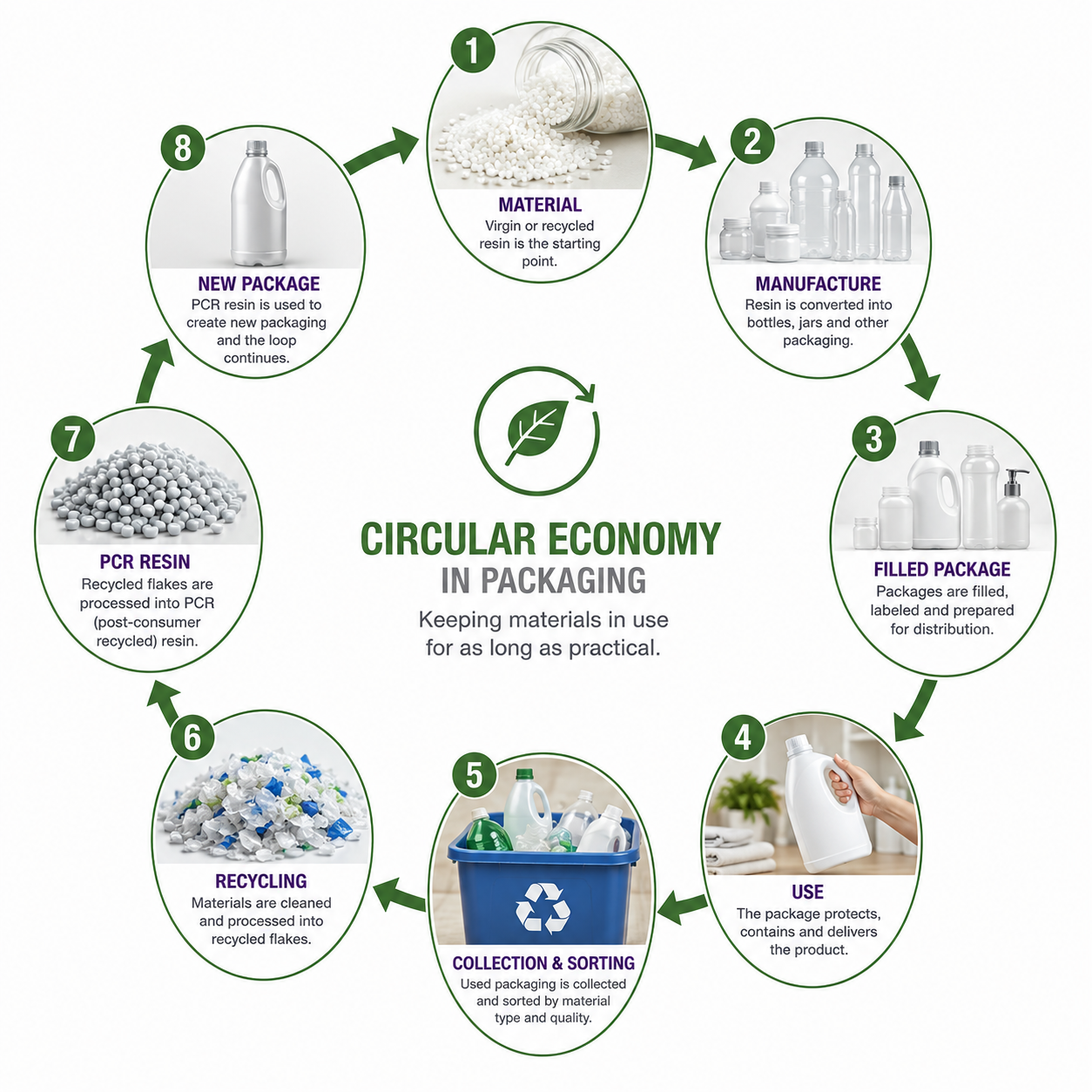
Circular packaging is broader than recycling. It considers the entire packaging system—including design, material selection, manufacturing, use, collection, sorting, recycling and the potential use of recovered material in new products or packaging.
The Fundamental Concept
What Does Circular Economy Mean for Packaging?
Circularity changes the way we think about packaging materials before, during and after the package is used.
In a traditional linear model, resources are extracted, converted into products or packaging, used and eventually discarded.
A circular model seeks to reduce that loss of materials by designing systems that use resources efficiently and create opportunities for materials to remain in circulation.
For rigid packaging, this can include reducing material where performance allows, incorporating recycled content, designing for recycling, improving material recovery and creating demand for recovered materials.
Circular Economy Is a System, Not a Single Package Feature
A bottle does not become “circular” simply because it contains recycled material or is technically recyclable. Circularity depends on multiple parts of the system working together—including package design, collection, sorting, recycling infrastructure, material quality and demand for recovered material.
Understanding the Difference
Linear Economy vs. Circular Economy
The easiest way to understand circularity is to compare it with the traditional linear model.
Linear Packaging Model
In a linear system, material generally moves in one direction and can leave productive use after disposal.
Circular Packaging Model
A circular system seeks to recover value from materials and return them to productive use where practical.
The Packaging Loop
How Can Packaging Move Through a Circular System?
A simplified rigid-packaging loop may involve several interconnected stages.
An Important Distinction
Is Circular Economy the Same as Recycling?
No. Recycling can be an important part of a circular economy, but circularity is a broader systems concept. It begins before a package reaches the recycling bin and continues after material is recovered.
Applying Circularity
What Packaging Strategies Can Support a Circular Economy?
There is no single circular-packaging solution. Different applications require different combinations of strategies.
Lightweighting
Reducing package weight can lower material use when the package can still meet required product-protection, filling and distribution performance.
Post-Consumer Recycled Content
Incorporating PCR can create demand for recovered material and reduce reliance on virgin resin where the material is appropriate for the application.
Design for Recycling
Material combinations, colors, labels, closures and other design choices can influence how a package interacts with recycling systems.
Material Simplification
In some applications, reducing unnecessary material complexity or using compatible components may support recycling objectives.
Reuse Systems
Certain applications may support refill or reuse models when the package, logistics and cleaning requirements make the system practical.
Product Protection
Circular packaging still needs to protect the product. Package failure, leakage, spoilage or damage can create additional material, product and transportation impacts.
Closing the Material Loop
What Role Does PCR Play in Circular Packaging?
Post-consumer recycled material can help connect recycling systems with the production of new products and packaging.
Collecting and recycling packaging is only part of the circularity equation. There also needs to be demand for the recovered material.
When appropriate for the application, incorporating PCR into packaging can help create a market for recycled material and reduce reliance on virgin resin.
However, PCR levels should be evaluated against product compatibility, package performance, regulatory requirements, appearance, processing, supply availability and cost.
Simple Packaging Example
What Could a Circular HDPE Bottle System Look Like?
Consider a simplified example of an HDPE bottle moving through a recycling and material-recovery system.
The loop depends on more than the bottle itself. Collection, sorting, recycling capability, recovered-material quality, application requirements and demand for recycled material all influence whether material can successfully remain in circulation.
Practical Decision Making
What Should Manufacturers Evaluate When Considering Circular Packaging?
Packaging & Product Requirements
Circularity & Business Requirements
Common Misconceptions
What Does Circular Packaging Not Automatically Mean?
Embed the Sustainability Simplified™ “What Is a Circular Economy?” video here.
Sustainability Simplified™ in Under a Minute
What Is a Circular Economy in Packaging?
Suggested Narration
“A circular economy moves packaging away from a simple make, use and dispose model. The goal is to reduce unnecessary material use and keep materials in circulation through strategies such as reuse, recycling and recycled content. For packaging, that means thinking about the entire system—from design and product protection through collection, recycling and how recovered materials are used again.”
When the video is published, include the transcript as HTML text on this page so visitors and answer engines can access the information.
Sustainability Simplified™ — At a Glance
Three Things to Remember About Circular Economy
Frequently Asked Questions
Circular Economy and Packaging FAQs
What is a circular economy?
What does circular economy mean for packaging?
Is circular economy the same as recycling?
How does PCR support a circular economy?
Does recyclable packaging automatically make packaging circular?
What is design for recycling?
Does circular packaging mean using less material?
Can plastic packaging be part of a circular economy?
What should manufacturers consider when evaluating circular packaging?
Applying Circularity to Real Packaging
Circular Packaging Starts With the Requirements of the Actual Application.
Empire EMCO helps manufacturers evaluate practical rigid packaging options based on material selection, PCR content, lightweighting, package design, product compatibility, performance, supplier capabilities, sourcing, availability, cost and sustainability goals.